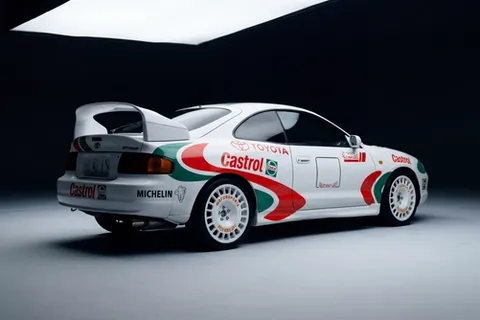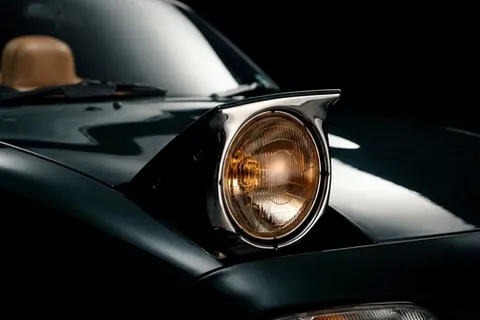
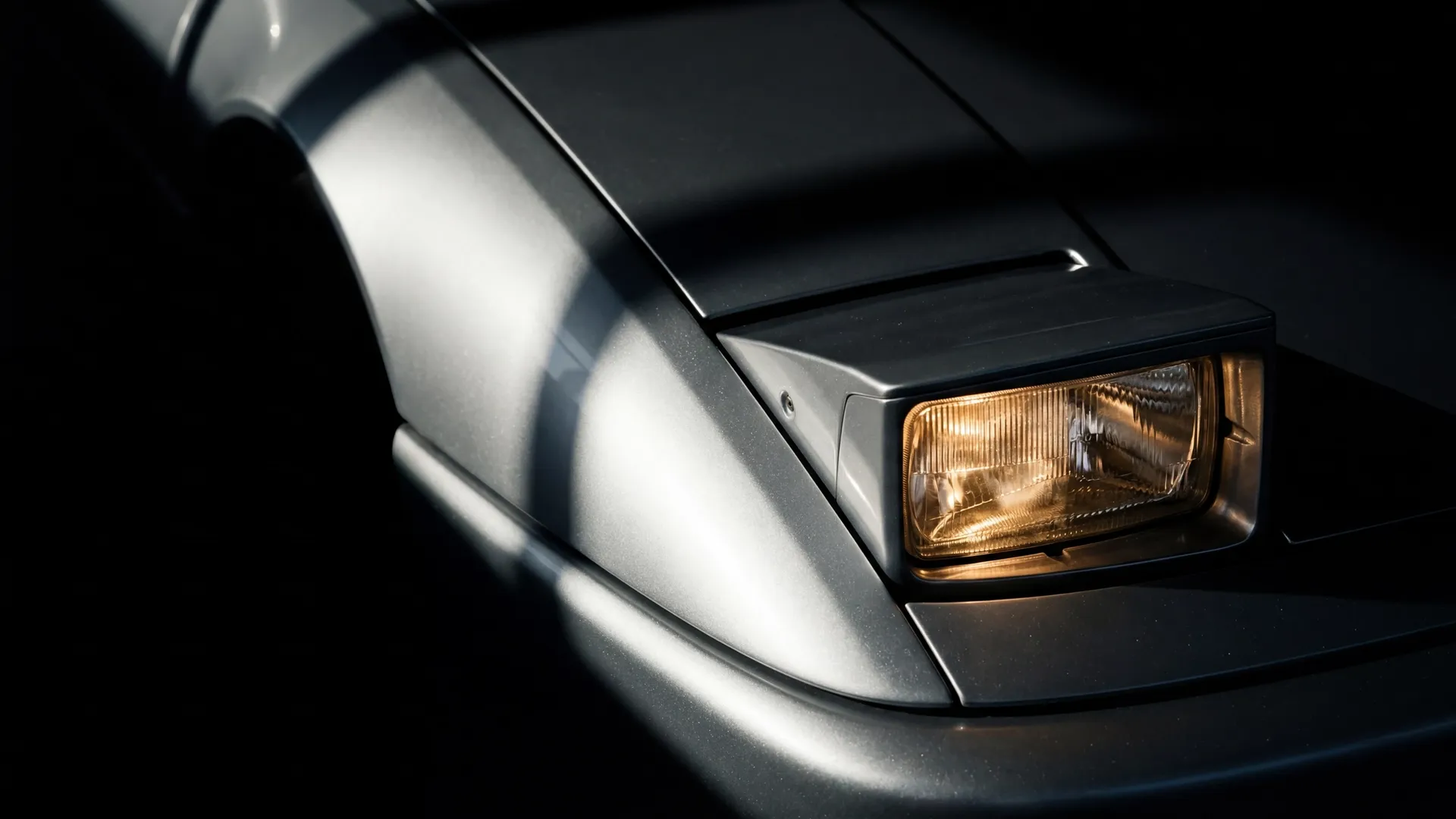
The Ferrari F355 is not the fastest car Ferrari ever built. It's not the most beautiful — that title belongs to the 250 GTO or the Dino, depending on your theology. It's not the most valuable, the most powerful, or the most technologically advanced. But it might be the most important Ferrari you can buy right now.
Because the F355 sits at a very specific inflection point in automotive history: it's the last Ferrari supercar that is entirely, uncompromisingly analogue. No electronic differential. No launch control. No magnetorheological dampers. No screens. Just a naturally aspirated 3.5-litre V8, a gated manual shifter, and hydraulic power steering that tells you everything about the road surface without a filter.
The F355 doesn't interpret the road for you. It simply connects you to it, with a directness that no modern Ferrari can replicate.
There's a reason the market is starting to notice. F355 prices have climbed 40% in the past three years, and the manual Berlinetta — the purest configuration — now regularly exceeds €180,000 at auction. This is not speculation. This is recognition.
The Analogue Experience
Driving the F355 in 2026 is a revelation. Not because it's fast — by modern standards, a Golf R would embarrass it in a straight line. The revelation is in what it asks of you. Every input matters. Your heel-toe technique matters. Your steering precision matters. Your ability to read the car's body language through the seat, the wheel, the pedals — it all matters.
Modern supercars are faster. Modern supercars are safer. Modern supercars will flatter you with electronic systems that make every driver feel like Schumacher. But the F355 doesn't flatter. It responds. And there's a difference between a car that makes you feel fast and a car that makes you drive well.
The gated shifter deserves its own paragraph. Maybe its own chapter. The mechanical precision of slotting a chrome lever through an open metal gate, feeling the synchros mesh, hearing the intake bark on a downshift — this is the experience that every sequential paddle shift in every modern car is trying to digitally recreate. And failing.
There's a difference between a car that makes you feel fast and a car that makes you drive well.
Ten years from now, the F355 manual will be what the 250 GTO is today — not in price, but in cultural status. The last of a kind. The final car from the most important manufacturer in history that trusted the driver completely. If you're considering one, stop considering. The window is closing.